Level 2 EV chargers come in two main configurations—hardwired and plug-in (outlet-based)—designed to deliver faster home charging depending on your electrical setup and daily driving needs. While some charger models are built exclusively as hardwired units (ex. Tesla Wall Connectors), others are designed strictly for plug-in convenience (ex. Tesla mobile connector) using a dedicated 240V outlet.
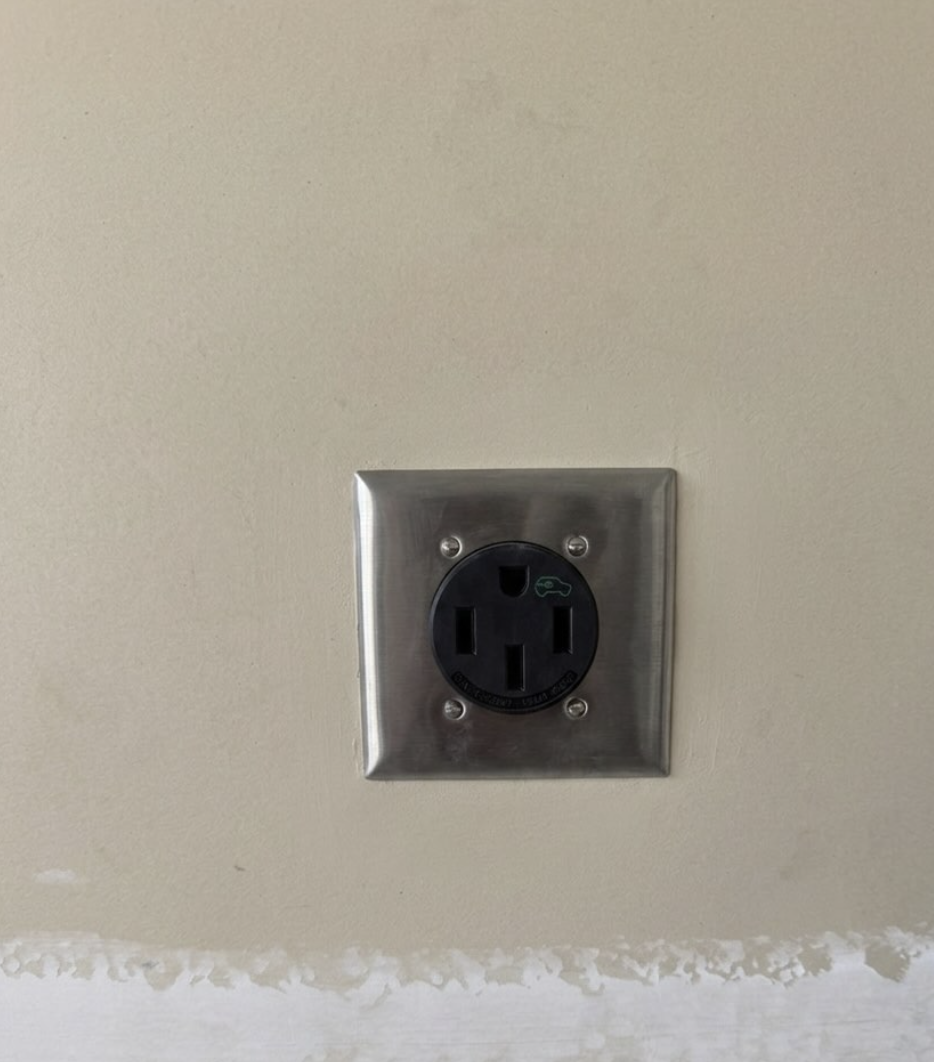
Plug-In
Outlet-based chargers plug into a dedicated 240V NEMA receptacle (like a 14-50) for flexible installation and portability.
Considerations: Requires a dedicated 240V receptacle (most commonly a NEMA 14-50 or 6-50) installed by a licensed electrician, along with a GFCI breaker as typically required by the Canadian Electrical Code (CEC).
Pros:
Offers ultimate flexibility, allowing you to easily unplug and take the charger with you if you move or switch vehicles.
Simplifies unit replacement or upgrades in the future since no hardwiring disassembly is required.
Cons:
Will only ever allow a max charge of 40 amps regardless of EV Charger.
Can be more expensive upfront if receptacle needs to be placed outside. There is a higher cost of a heavy-duty, weather-rated outdoor 240V receptacle and a mandatory GFCI breaker.
Examples of EV Chargers that are plug-in:
Emporia level 2 charger
Chargepoint homeflex
Polestar charging cable
Tesla Mobile connector
SWTCH 40A (NEMA 14-50 option)
Grizzl-e 40A Classic Connect
& Many More
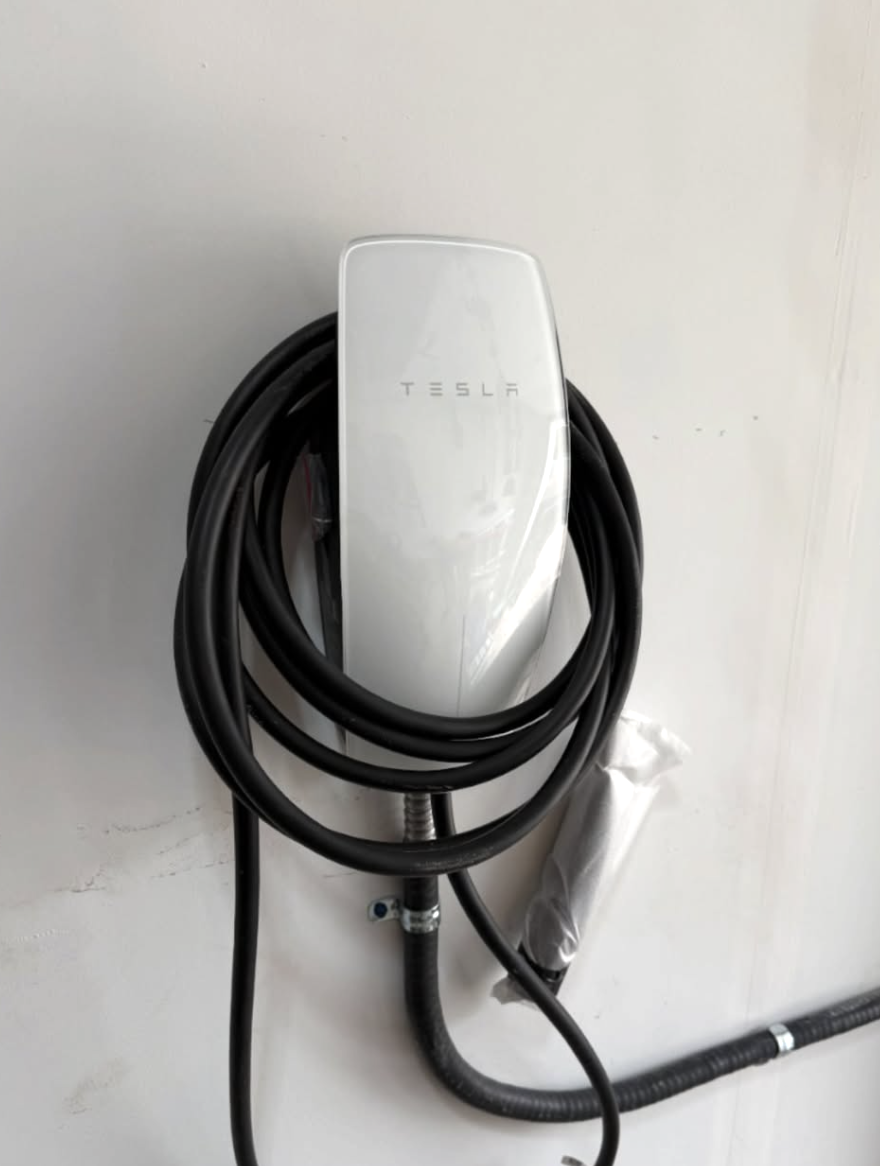
Hardwired
Hardwired units are permanently connected to your electrical panel for maximum weather resistance and higher amperage output.
Considerations: Permanently wired directly into your electrical panel or a junction box, making it a fixed, permanent fixture of the home.
Pros:
Eliminates the physical plug connection, which generally provides a cleaner look, higher weather resistance, and maximum reliability for outdoor installations.
Often allows for higher maximum amperage outputs (such as continuous 48-amp or 80-amp charging) without worrying about receptacle heat limits.
Cons:
Lacks portability; if you move or want to change units, you will need an electrician to disconnect and uninstall the hardware.
Examples of EV Chargers that are hardwired
Tesla Wall Connector
Tesla Universal Wall Connector
SWTCH 48A (hardwired option)
Wallbox Pulsar Plus 48A
Grizzl-e 40A Classic connect (can be hardwired)
& Many More
note that many plug in options can also be hardwired.
-
Answer: If you are using a regular outlet, you will only ever get to level 1 charging. Using a standard household outlet (a regular 120-volt NEMA 5-15 receptacle, often called Level 1 charging) to charge your electric vehicle is entirely possible, but with major limitations:
Extremely Slow Charging Speeds: Level 1 charging typically adds only 2 to 5 miles of range per hour, making it the slowest way to charge.
Long Recovery Times: Fully replenishing a standard EV battery from empty can take anywhere from 40 to 60+ hours, which usually isn't practical for daily commuting.
Best Suited For: It works best as an occasional backup solution, for plug-in hybrids with smaller battery packs, or for drivers with very low daily mileage (under 30 miles a day) who can plug in overnight for long stretches.
-
Despite this being a praised option online to save money, this is not recommend. Such receptacles (usually a NEMA 10-30 or NEMA 14-30) are not designed for ongoing, continuous electricity and thus using it for an EV charging comes with significant risk (overheating and fire hazards). Furthermore, such an option will only allow you to get 24 amp max charging speed.
-
You have two options. Contact an electrician to uninstall the device or simply leave it. Believe it or not, recent studies show that having an EV charger pre-installed increases the value of your home by approximately 1.5%! More and more homeowners are looking for this option and thus they view it as a benefit if there is a hardwired device already installed at the home.
-
Yes. The best in class EV Chargers are all weatherproof.
-
Yes but this can increase the price of an install. Specialized waterproofing material is needed.
-
Answer: It is a common misconception that if you are installing a level 2 charger, you must do a service upgrade. This is simply not true. At MR EV CHARGER, we will review your entire electrical set up and ensure you are made aware of all of your options to support the new EV charger.
note that about 80% of the time, clients want to avoid a costly upgrade and we have been successful in doing so for them.
-
Answer: Choosing between a plug-in or hardwired EV charger really comes down to your charging speed, where it's going, and what flexibility you want down the road.
Go with hardwired if: You want maximum charging speed, plan to install the unit outside where it faces the elements, or just want a clean, permanent look in the garage. Hardwiring eliminates the physical plug entirely, which removes a potential point of wear and tear over time.
Go with a plug-in option if: You value the flexibility of being able to unplug the unit and take it with you if you move or switch vehicles, or if you want an easier swap-out process in the future.
For a permanent, set-and-forget garage setup, I generally recommend hardwiring for its reliability and higher output limits. But if you like the peace of mind of having a removable unit, a dedicated, heavy-duty NEMA 14-50 outlet works great too.
To further support your decision, see the EV Charging cheat sheet we put together to support our clients.
EV Charging Cheat Sheet
| Charger Rating (MAX) | Connection Type | Breaker Size | Hardware Setting | Safe Amps | Charge Time |
|---|---|---|---|---|---|
| 48 Amps | Hardwire Only | 60 Amps | 48A (Default) | 48 Amps | 7-7.5 hrs |
| 48 Amps | 🔌 NEMA 14-50 | 50 Amps | DIP 40A | 40 Amps | 8.5-9 hrs |
| 48 Amps | 🔌 NEMA 14-50 | 40 Amps | DIP 32A | 32 Amps | 10.5-11.5 hrs |
| 48 Amps | 🔌 NEMA 14-30 | 30 Amps | DIP 24A | 24 Amps | 14-15 hrs |
| 40 Amps | Hardwire Only | 50 Amps | 40A (Default) | 40 Amps | 8.5-9 hrs |
| 40 Amps | 🔌 NEMA 14-50 | 50 Amps | 40A | 40 Amps | 10.5-11.5 hrs |
| 40 Amps | 🔌 NEMA 14-50 | 40 Amps | DIP 32A | 32 Amps | 12-15 hrs |
| 40 Amps | 🔌 NEMA 14-30 | 30 Amps | DIP 24A | 24 Amps | 10.5-11.5 hrs |
| 32 Amps | Hardwire Only | 40 Amps | 32A | 32 Amps | 14-15 hrs |
| 32 Amps | 🔌 NEMA 14-50 | 40 Amps | 32A | 32 Amps | 10.5-11.5 hrs |
| 32 Amps | 🔌 NEMA 14-30 | 30 Amps | DIP 24A | 24 Amps | 10.5-11.5 hrs |
| 24 Amps | Hardwire Only | 30 Amps | 24A | 24 Amps | 14-15 hrs |
| 24 Amps | 🔌 NEMA 14-30 | 30 Amps | 24A | 24 Amps | 14-15 hrs |
| 16 Amps | Hardwire Only | 20 Amps | 16A | 16 Amps | 14-15 hrs |
| 16 Amps | 🔌 NEMA 6-20 | 20 Amps | 16A | 16 Amps | 21-23 hrs |
| 12 Amps | Hardwire Only | 15 Amps | 12A | 12 Amps | 28-30 hrs |
| 12 Amps | 🔌 NEMA 5-15 | 15 Amps | 12A | 12 Amps | 28-30 hrs |
Note: You can always put a higher-rated charger (like a 48A or 40A unit) on a lower-amperage circuit if and only if the hardware features physical DIP switches or a locked rotary dial to permanently restrict the max output to match the 80% rule.
You can never run a charger higher than the hardware's built-in factory maximum, nor can you exceed 80% of the breaker capacity. For example, a 32A charger cannot be "boosted" to 40A even if plugged into a 50A breaker.
Charge time can vary by make and model of car.